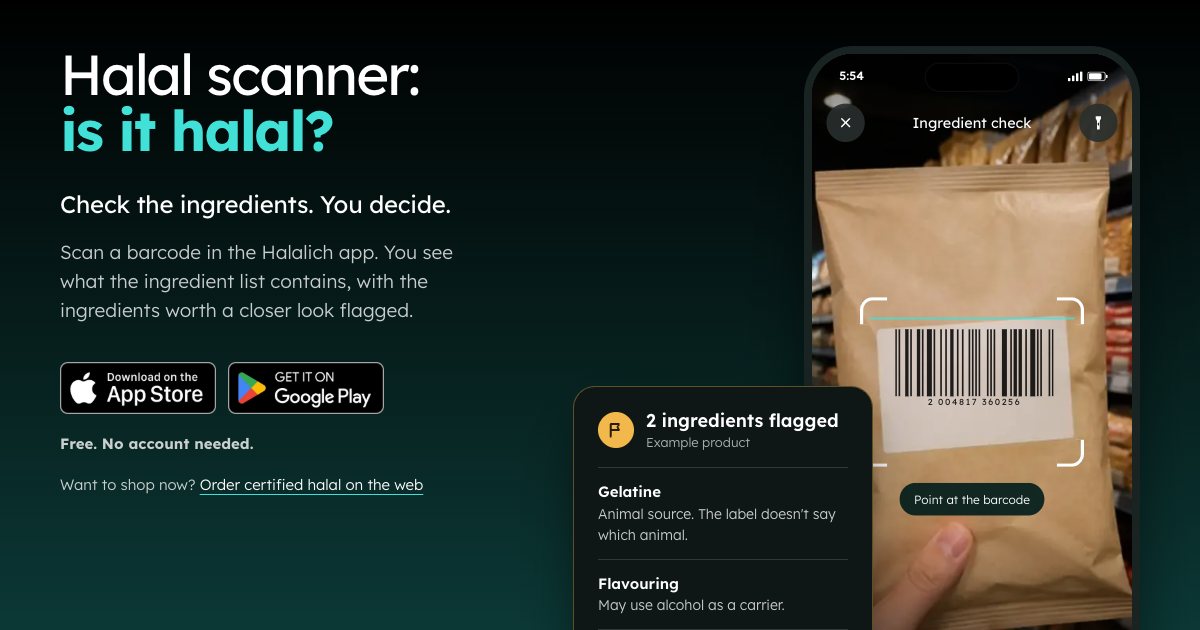
Gelatin can come from pigs, cattle or fish. In Europe most of it comes from pigs. A plain "Gelatine" on the label does not say which, so you cannot tell from the pack alone.
This guide shows where gelatin hides, what changes the picture, and how to check before you buy. It does not give a ruling. Where scholars differ, we say so.
Last reviewed: 10 November 2026.
Short answer
- Gelatin is made from the bones and skin of animals. Its E-number is E441.
- Pork is not permitted in Islam. Pork gelatin is the most common kind in Europe.
- Beef gelatin raises a second question: how the animal was slaughtered. A label does not say, and a halal certificate is how many people get that answer.
- Fish gelatin and plant-based gelling agents such as pectin and agar-agar come from different sources. The wording on the pack changes the picture.
Where gelatin hides
Sweets are the obvious place, but there are more:
- Gummy sweets and marshmallows
- Yoghurt, quark and desserts
- Cake fillings and glazes
- Jelly and gelatin-based sauces
- Capsules (vitamins, supplements and medicine)
- Some juices, wine and beer, where it can be used to clear the drink (a processing aid, which does not always appear on the label)
For parents, gummy sweets are the main worry. If you buy sweets for children, check the ingredient list every time, even for a brand you know. Recipes change.
How common is each source?
Rough guide, not hard data:
| Source | How common in Europe |
|---|---|
| Pork | Very common |
| Beef | Common |
| Fish | Rare |
Beef gelatin: why "Rindergelatine" is not the full answer
The word "Rindergelatine" tells you the gelatin comes from cattle. That rules out pork. It does not tell you how the animal was slaughtered, and the label cannot say.
This is why many Muslims look for a halal certificate on the product, not only a word on the ingredient list. A certificate shows that a certifying body has looked at the supply chain. For what a certificate covers, read what halal certification means in Germany.
The Halalich scanner does not check certificates. It flags the ingredient and shows you what to look for.
The transformation debate (istihala)
Some scholars hold that when a raw material is chemically transformed into a new substance, the new substance is judged on its own. By this view, gelatin made from pig bones is a different thing from the bones.
Other scholars hold that the substance keeps the status of what it came from, even after processing.
Both views are held by respected scholars. Certifiers and scholars apply them differently. We do not choose between them. If this matters to your household, ask a scholar you trust.
Alternatives
Other gelling options include:
- Pectin, made from fruit and often used in vegan gummies and jam
- Agar-agar, made from algae
- Fish gelatin, which comes from fish and is rare in European sweets
Look for "Pektin", "Agar-Agar" or "vegan" on the label. Some sweets are also made with halal-certified gelatin. The certificate on the pack tells you.
How to check
- Read the wording. "Rindergelatine", "Fischgelatine" or "Pektin" changes the picture. A plain "Gelatine" does not.
- Look for "ohne Gelatine" or a vegan or vegetarian label. They mean the product has none.
- Look for a halal certificate. For beef gelatin this is the step most people rely on.
- Ask the maker. One question is enough: "Which animal is the gelatin made from?"
- Scan the barcode. The Halalich scanner flags gelatin and shows how to find out.
FAQ
Is beef gelatin halal?
It depends. Beef gelatin rules out pork, but it still depends on how the cattle were slaughtered, and the label cannot say. Many people look for a halal certificate. Ask a scholar you trust for your own household.
Is gelatin always from pork?
No. It can come from pigs, cattle or fish. In Europe most of it comes from pigs.
Is fish gelatin halal?
Fish gelatin comes from fish, not from pigs or cattle, so the pork question does not arise. Whether it suits your household is a question for a scholar you trust. It is rare in European sweets.
Is E441 gelatin?
Yes. E441 is the E-number for gelatin.
Is gelatin in medicine capsules allowed?
We do not give rulings on medicine. Ask your pharmacist about the source and a scholar about what applies to you. Many capsules also come in plant-based versions.
Check before you buy sweets
The Halalich app has a free ingredient scanner. You do not need an account.
Scan a barcode. The app shows which ingredients are worth checking, such as gelatin, and how to find out the source. It shows what the ingredient list says. You decide.
This guide is part of a series. For the full overview of additives, read the halal E-numbers list. Hidden ingredients are a theme in this series. Read our guide on hidden alcohol in food next.