Alcohol does not only sit in drinks. It can be a carrier in flavourings, the base of vanilla extract and a trace in drinks sold as "alcohol-free". The label often does not tell you how much is left, or whether there is any.
This guide shows where alcohol hides and what German labels do and do not show. It also shows how to check. It does not give a ruling. Where scholars and certifiers differ, we say so.
Last reviewed: 10 November 2026.
Short answer
- Alcoholic drinks are not permitted in Islam, and that point is not in debate.
- Small amounts from fermentation, or alcohol used as a carrier for flavour, are where people follow different guidance.
- Some things look like alcohol but are different. Vinegar is a common example. The scanner does not flag it.
- The label often cannot settle the question. A producer does not have to say what a flavouring is made of.
Where alcohol hides
| Product | Where the alcohol can come from |
|---|---|
| Flavouring ("Aroma", "natürliches Aroma") | Alcohol used as a carrier. The recipe is not disclosed |
| Vanilla extract and essences | Flavour soaked in alcohol. American rules require at least 35% alcohol in vanilla extract. Labels in Europe usually do not say how much remains |
| Desserts, cakes and sauces | Rum, wine or liqueur listed as an ingredient |
| Soy sauce and some seasonings | Small amounts of alcohol can form during brewing. Check the pack |
| Drinks marked "alkoholfrei" | Trace alcohol, see below |
What the label shows and what it does not
An ingredient list shows alcohol when it is added as an ingredient, for example "Rum" or "Weinbrand".
It does not show alcohol that arrives inside another ingredient. A flavouring is listed as "Aroma". What the flavour was dissolved in is not.
Producers also do not have to list some processing aids that leave only traces in the finished product. This is set out in EU Regulation 1169/2011 on food information. It is one reason a clean-looking list can still leave questions open.
"Alkoholfrei" and "0,0 %"
In Germany, a drink labelled "alkoholfrei" may contain up to 0.5% alcohol by volume. A drink marked "0,0 %" is meant to contain none.
So non-alcoholic beer can contain a trace. People follow different guidance on whether that matters. If it matters to you, look for 0,0 % or ask the maker.
Vinegar
Vinegar is made when alcohol turns into acetic acid during fermentation. It is a common question, because wine vinegar and balsamic vinegar start from wine or grape must.
The Halalich scanner does not flag vinegar. Some people follow stricter guidance on vinegar made from wine. If that applies to you, check the type on the label (for example "Weinessig" or "Branntweinessig") or ask a scholar you trust.
What scholars and certifiers say
Scholars and certifiers draw the line in different places. We do not choose one. Here is how the question is usually framed:
- A drink made to intoxicate is not permitted, whatever the amount.
- Trace alcohol that forms naturally, for example in ripe fruit or bread, is a separate question from alcohol that is added.
- Alcohol used as a flavour carrier is where views split most. Certifiers set different limits on what may remain in the finished product, and some allow none.
- Vinegar and yeast raise their own questions.
Ask a scholar you trust for a ruling on your household.
How to check
- Check for "alkoholfrei" on the pack. For flavourings and extracts, this is the clearest signal on the label.
- Choose vanilla pod or vanilla powder ("Vanillemark", "gemahlene Vanille") in place of extract.
- Find a halal certificate. It covers the whole product, including flavourings.
- Ask the maker. One question works: "Does the flavouring in this product contain alcohol?"
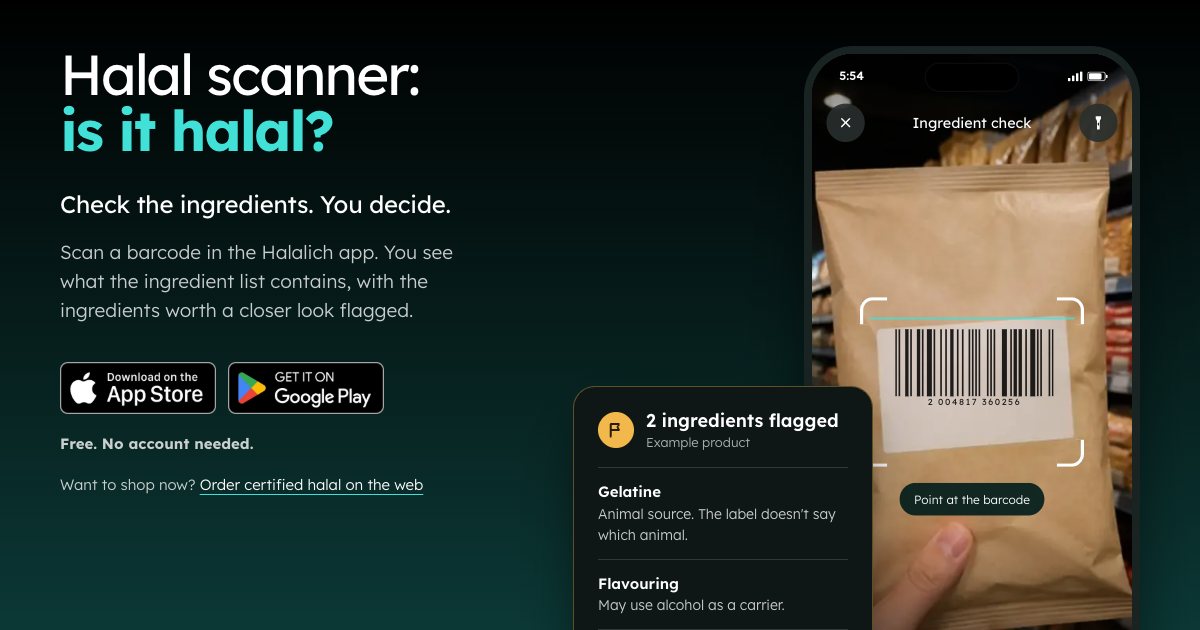
- Scan the barcode. The Halalich scanner flags alcohol, flavourings and vanilla extract.
A vegan label rules out animal ingredients. It does not rule out alcohol.
FAQ
Is ethanol in flavourings haram?
People follow different guidance on small amounts used as a carrier. The label does not tell you whether a flavouring contains alcohol. Ask the maker, or ask a scholar you trust.
Is non-alcoholic beer halal?
It depends on the amount and on whose guidance you follow. "Alkoholfrei" in Germany allows up to 0.5% alcohol by volume. Look for 0,0 % if you want none.
Is vinegar halal?
Vinegar is a common question. The scanner does not flag it. Some people follow stricter guidance for vinegar made from wine. Ask a scholar you trust if it matters to you.
Is soy sauce halal?
Soy sauce can contain a small amount of alcohol from brewing. Check the label and the maker's information.
Is vanilla extract halal?
Vanilla extract is usually made with alcohol, and the label does not say how much remains. Vanilla pod, vanilla powder or an "alkoholfrei" extract avoids the question.
Is Weingeistessig halal?
Weingeistessig is vinegar made from distilled alcohol. The question is the same as for other vinegars. Ask a scholar you trust.
Check before you buy
The Halalich app has a free ingredient scanner. You do not need an account.
Scan a barcode. The app shows which ingredients are worth checking, such as alcohol or flavourings, and how to find out more. It shows what the ingredient list says. You decide.
For the full list of additives, read the halal E-numbers list. Gelatin can also be used to clear juice, wine and beer, as we explain in Is gelatin halal?
Start with Sohni Spices to see grocery shops in the Halalich app.