E471 is an emulsifier that can be made from plant oil or from animal fat. The label does not say which. So the honest answer is: it depends on the source, and you cannot read the source off the pack.
This guide explains what E471 is, where you find it and how to check what is in your product. It does not give a ruling. Where people follow different guidance, we say so.
Last reviewed: 10 November 2026.
Short answer
- E471 is made from fat. Today most of it comes from plant oils such as palm, soy or sunflower.
- It can also be made from animal fat. Animal fat can come from pigs or cattle.
- The label usually does not tell you which. The same E-number covers both.
- You can find out through a vegan label, a halal certificate, a note such as "pflanzlich" or by asking the maker.
What E471 is
E471 is the E-number for mono- and diglycerides of fatty acids. On German labels you will read "Mono- und Diglyceride von Speisefettsäuren". It is the same thing.
An emulsifier helps oil and water mix and stay mixed. That gives bread a softer crumb, ice cream a smoother texture and margarine a stable spread.
The E472 group (E472a to E472f) are close relatives. They are made from E471 plus another acid, such as acetic, lactic or citric acid. They raise the same question about the fat they start from.
Where you find it
- Bread, rolls and toast
- Cakes and biscuits
- Ice cream
- Margarine and spreads
- Chocolate and sweets
- Instant mashed potato and ready meals
It is one of the most common emulsifiers in supermarkets. If you read labels often, you will see it every day.
Plant or animal: which is more common?
Rough guide, not hard data:
| Source | How common |
|---|---|
| Plant oils (palm, soy, sunflower) | Very common |
| Animal fat | Uncommon |
So most E471 you meet is plant-based. The question is not whether it is usually plant-based. The question is whether you can confirm it for this product.
What scholars and certifiers say
People do not all give the same answer, so we do not give one. Here is how the question is usually framed:
- Many Muslims accept a plant-based emulsifier without concern.
- Pork fat is not permitted in Islam. If the E471 comes from pigs, the product contains it.
- For animal fat from other animals, certifiers and scholars look at the animal and how it was slaughtered. A label does not say.
- When the source is unknown, many people treat the ingredient as doubtful (mushbooh in Arabic) and want it confirmed before they buy.
Ask a scholar you trust for a ruling on your own household.
"E471 vegan": what a vegan label proves
A vegan label on the pack means the maker says no animal ingredients are in the product. That includes E471. So if you see a vegan label, the E471 in that product is plant-based.
No vegan label does not mean animal-based. Many plant-based products carry no vegan label at all. The absence of the label tells you nothing either way.
How to check in the shop
- Read the full ingredient list. Look for "pflanzlich" or "aus Palmöl" next to the emulsifier.
- Look for a vegan label. It means the E471 is plant-based.
- Look for a halal certificate. It covers the product, not only this one ingredient.
- Ask the maker. Use the contact form or email on the pack. One short question is enough: "Is the E471 in this product plant-based?"
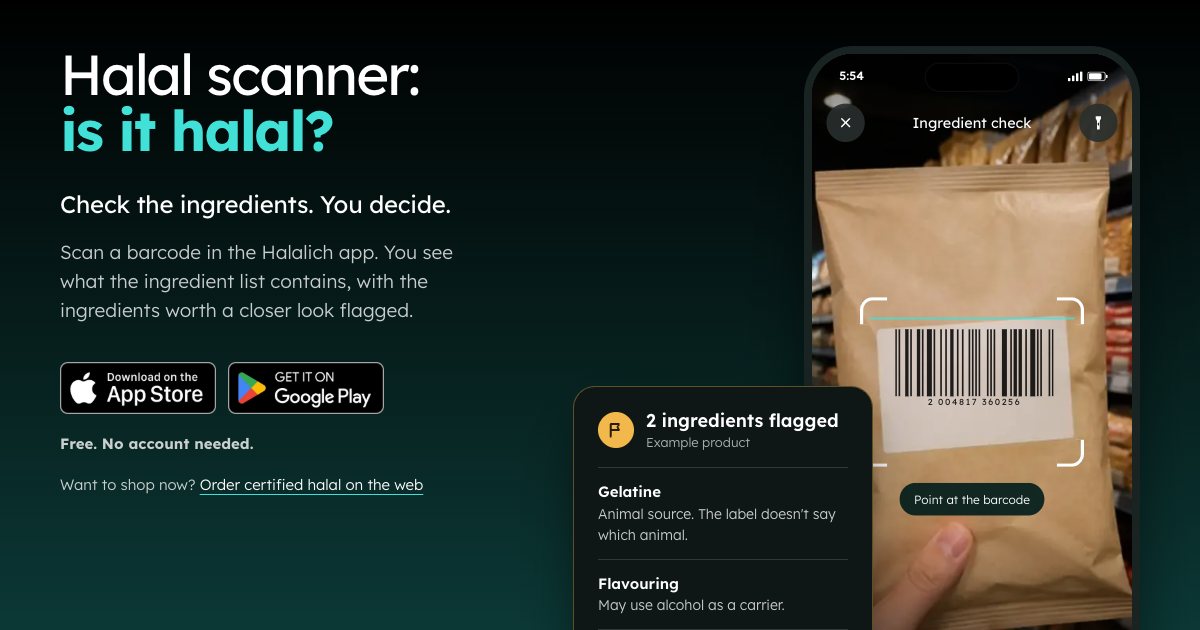
- Scan the barcode. The Halalich scanner flags E471 and E472 and tells you what to look for.
FAQ
Is E471 made from pork?
It can be, if the maker uses animal fat from pigs. Most E471 today is made from plant oils. The label does not tell you which.
What does "Mono- und Diglyceride von Speisefettsäuren" mean?
It is the German name for E471. The ingredient is the same.
Is E471 vegan?
Only if it comes from plant oils. A vegan label on the pack means it does.
Is E471 in bread halal?
It depends on the source of the E471. The label on the bread does not say. Ask the bakery or the maker, or look for a vegan or halal label.
Is E472 the same as E471?
No. E472 is a related group. It is made from E471 plus another acid. It raises the same question about the source of the fat.
Check before you buy
The Halalich app has a free ingredient scanner. You do not need an account.
Scan a barcode. The app shows which ingredients are worth checking, such as E471, and how to find out the source. It shows what the ingredient list says. You decide.
This guide is one of a series. Start with the halal E-numbers list for the full overview, or read our guide on gelatin.